Section outline
-

Introduction
Welcome to the topic of Artificial Intelligence (AI)! In this section, we will explore the fascinating world of AI, which involves creating systems that can perform tasks typically requiring human intelligence. You will learn about the history and development of AI, the fundamental concepts, and the ethical considerations surrounding its use. We will also discuss the different types of AI, including narrow, general, and superintelligence, and how AI is transforming various aspects of our daily lives.
-
-
-
-
-
-
-
-
-
Students mustMake a submission
-
Students mustMake a submission
-
Students mustMake a submission
-
Students mustMake a submission
-
-
Introduction
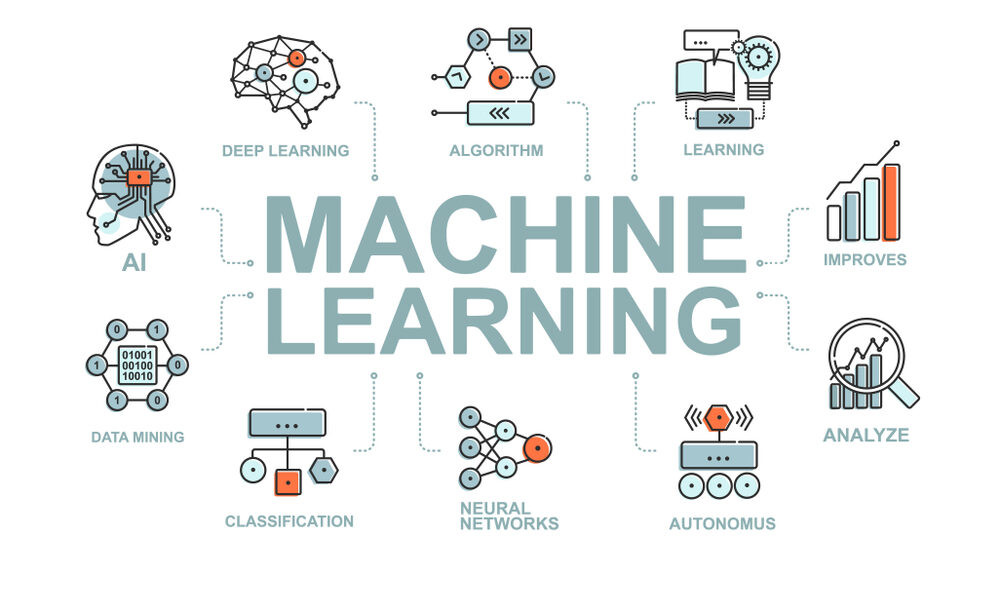
Welcome to the topic of Machine Learning (ML)! Machine learning is a subset of AI that focuses on developing algorithms that allow computers to learn from and make predictions based on data. In this section, you will gain a deep understanding of the basic concepts of machine learning, the different types of learning (supervised, unsupervised, semi-supervised, and reinforcement learning), and the importance of data in this process. We will also cover the steps involved in building and validating machine learning models, and how these models can be applied to solve real-world problems.
-
Introduction
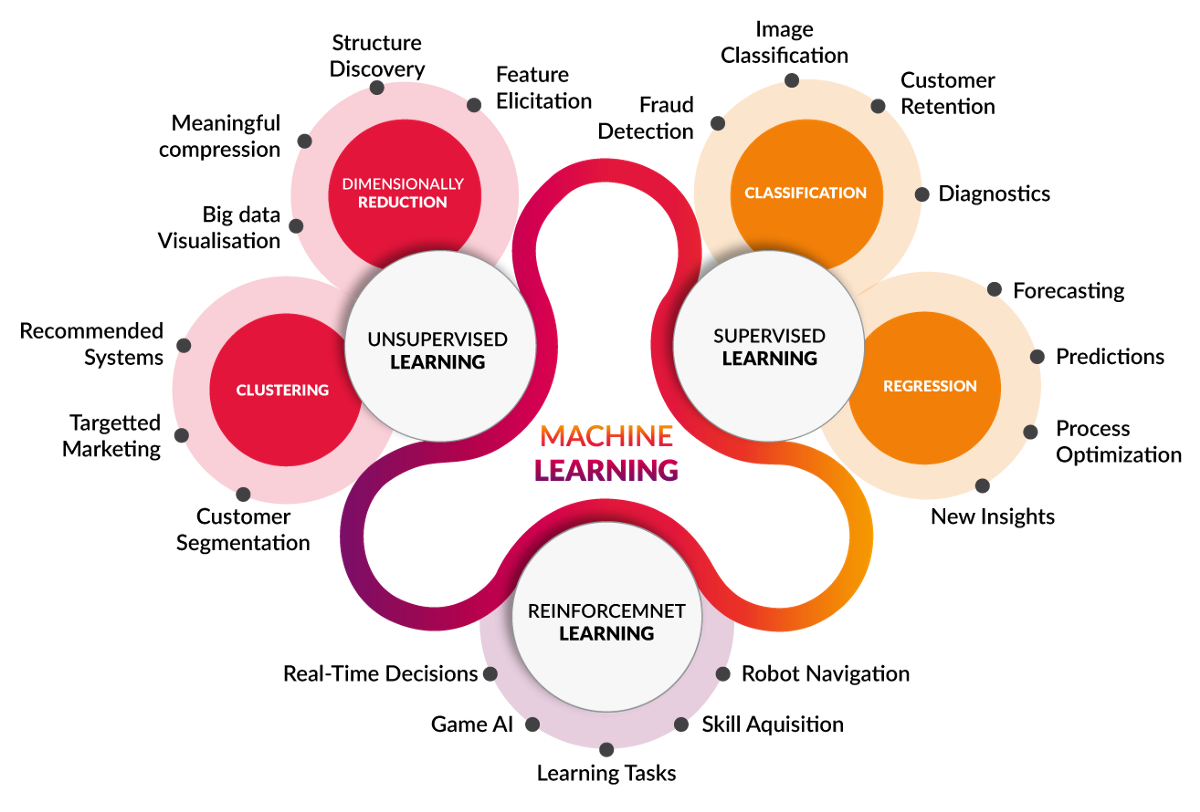
Welcome to the topic of Learning Models! This section delves into the various models and techniques used in machine learning to solve different types of problems. You will learn about linear regression, classification, decision trees, and the k-nearest neighbors algorithm, among others. We will discuss the characteristics, advantages, and disadvantages of each model, and the importance of model validation to ensure accuracy and reliability. Through practical exercises, you will apply these models to real datasets and interpret the results.
-
-

Introduction
Welcome to the topic of Neural Networks! Neural networks are a key component of deep learning, a subset of machine learning that mimics the structure and function of the human brain. In this section, you will learn about the basic elements of neural networks, including neurons, layers, and activation functions. We will explore different types of neural network architectures, such as convolutional and recurrent neural networks, and their applications in solving complex problems. You will also gain hands-on experience in training and testing neural networks using popular tools and frameworks.
-
-
-
-
-
-
-
Students mustMake a submission
-
-
Students mustMark as done
TOPIC TITLE: Neural Networks (8T+4E)
OUTCOMES
Upon completion of the topic, the student will be able to:
RECOMMENDED CONTENT AND KEY CONTENT CONCEPTS
– explain the context of neural networks and deep learning;
– list typical cases when neural networks can be applied to solve problems;
– describe the process of training a neural network;
– List the basic properties and types of architectures of artificial neural networks;
– Apply a procedure to solve a given problem using neural networks.
– Neural networks.
– Training of neural networks.
– Types of neural networks.
Exercises:
1 . Training neural networks.
Key concepts: Artificial neural networks.
-
-
-
-
-
Students mustMark as done
-
-
-
Students mustMark as done
-
-
-
-
-
-
-
-
-
-
Due: Saturday, 20 December 2025, 10:59 PMStudents mustMake a submission
-