Completion requirements:
- View
[Machine Learning is the] field of study that gives computers the ability to learn without being explicitly programmed.
—Arthur Samuel, 1959
The Relationship Between Artificial Intelligence and Machine Learning
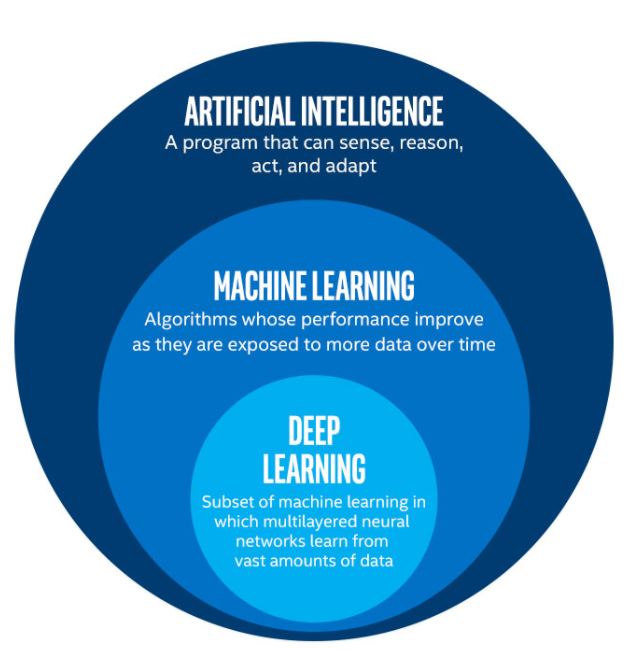
Artificial Intelligence (AI) and Machine Learning (ML) are two interrelated fields that have gained significant attention in recent years due to their transformative impact on technology and society. While often used interchangeably, they represent distinct concepts within the broader landscape of computational intelligence. Understanding their relationship is crucial for grasping how modern AI systems operate and evolve.
Artificial Intelligence (AI)
AI encompasses a wide range of technologies and methodologies aimed at creating systems capable of performing tasks that typically require human intelligence. These tasks include reasoning, problem-solving, perception, understanding natural language, and more. The primary objective of AI is to develop machines that can mimic cognitive functions associated with human beings, enabling them to perform complex tasks efficiently.
Machine Learning (ML)
ML is a specialized subset of AI focused on the development of algorithms that allow computers to learn from data. Instead of being explicitly programmed to perform a task, ML algorithms identify patterns within datasets and make predictions or decisions based on that data. This characteristic enables ML systems to improve their performance over time as they are exposed to more data.
The Interconnection Between AI and ML
The relationship between AI and ML is fundamentally synergistic. While all ML is a form of AI, not all AI systems utilize machine learning techniques. Here’s how they interact:
- Foundation of AI: AI provides the theoretical framework for creating intelligent systems, while ML offers practical techniques for implementing these systems. For instance, natural language processing (NLP), a significant area of AI, relies heavily on ML algorithms to process and understand human language effectively.
- Learning Mechanisms: Traditional AI systems were primarily rule-based, relying on predefined rules and logic to make decisions. However, these systems struggled with uncertainty and variability in data. ML introduced the ability for AI systems to learn from experience, allowing them to adapt to new information and make probabilistic decisions. This advancement is particularly important in dynamic environments like autonomous vehicles, which must navigate complex road conditions.
- Applications in Robotics: The synergy between AI and ML is evident in robotics. Intelligent robots utilize AI for cognitive capabilities while employing ML algorithms for navigation, obstacle avoidance, and task execution. For example, warehouse robots can autonomously navigate their environment using computer vision powered by ML techniques.
- Predictive Analytics: In business applications, predictive analytics leverages both AI and ML to forecast future outcomes based on historical data. AI provides the foundational framework for creating predictive models, while ML enhances these models' ability to learn from data and generate accurate predictions.
Key Techniques in Machine Learning
Machine learning encompasses several techniques that contribute to its effectiveness in enhancing AI applications:
- Supervised Learning: In this approach, algorithms are trained on labeled datasets where the correct output is known. The model learns to map inputs to outputs based on this training data, enabling it to make predictions on new, unseen data.
- Unsupervised Learning: Unlike supervised learning, unsupervised learning involves training algorithms on unlabeled data. The model identifies inherent patterns or structures within the data without explicit guidance on what to look for.
- Reinforcement Learning: This technique involves training an agent through trial-and-error interactions with its environment. The agent receives feedback in the form of rewards or penalties based on its actions, allowing it to learn optimal strategies over time.
- Deep Learning: A subset of ML that utilizes artificial neural networks with multiple layers (deep networks) to analyze complex datasets such as images or audio signals. Deep learning has driven many recent advancements in areas like computer vision and natural language processing.
Real-World Applications
The integration of AI and ML has led to significant advancements across various industries:
- Healthcare: AI-powered diagnostic tools leverage ML algorithms to analyze medical images for disease detection or predict patient outcomes based on historical health data.
- Finance: In finance, ML models are used for fraud detection by analyzing transaction patterns in real-time, providing banks with tools to mitigate risk effectively.
- Autonomous Vehicles: Self-driving cars utilize a combination of AI techniques such as computer vision and decision-making alongside ML algorithms like deep learning to interpret sensory data from cameras and LIDAR systems.
- Retail: E-commerce platforms employ ML algorithms for personalized recommendations based on user behavior and preferences, enhancing customer experience.
Challenges in the Relationship Between AI and ML
Despite their potential benefits, the relationship between AI and ML also presents challenges:
- Data Quality: The effectiveness of ML algorithms heavily relies on the quality of the training data. Poor-quality or biased data can lead to inaccurate predictions or reinforce existing biases within AI systems.
- Interpretability: Many advanced ML models, especially deep learning networks, operate as "black boxes," making it challenging for users to understand how decisions are made. This lack of transparency can hinder trust in AI applications.
- Ethical Concerns: As AI systems increasingly influence critical areas like hiring or law enforcement, ethical considerations regarding fairness, accountability, and transparency become paramount.
Conclusion
The relationship between artificial intelligence and machine learning is foundational to understanding modern technological advancements. While machine learning serves as a powerful tool within the broader field of AI, it is essential to recognize the distinct roles each plays in developing intelligent systems capable of transforming industries and improving lives. As both fields continue to evolve together, addressing challenges related to data quality, interpretability, and ethics will be crucial for harnessing their full potential responsibly.
Last modified: Sunday, 2 March 2025, 1:26 PM