Completion requirements:
- View
Introduction
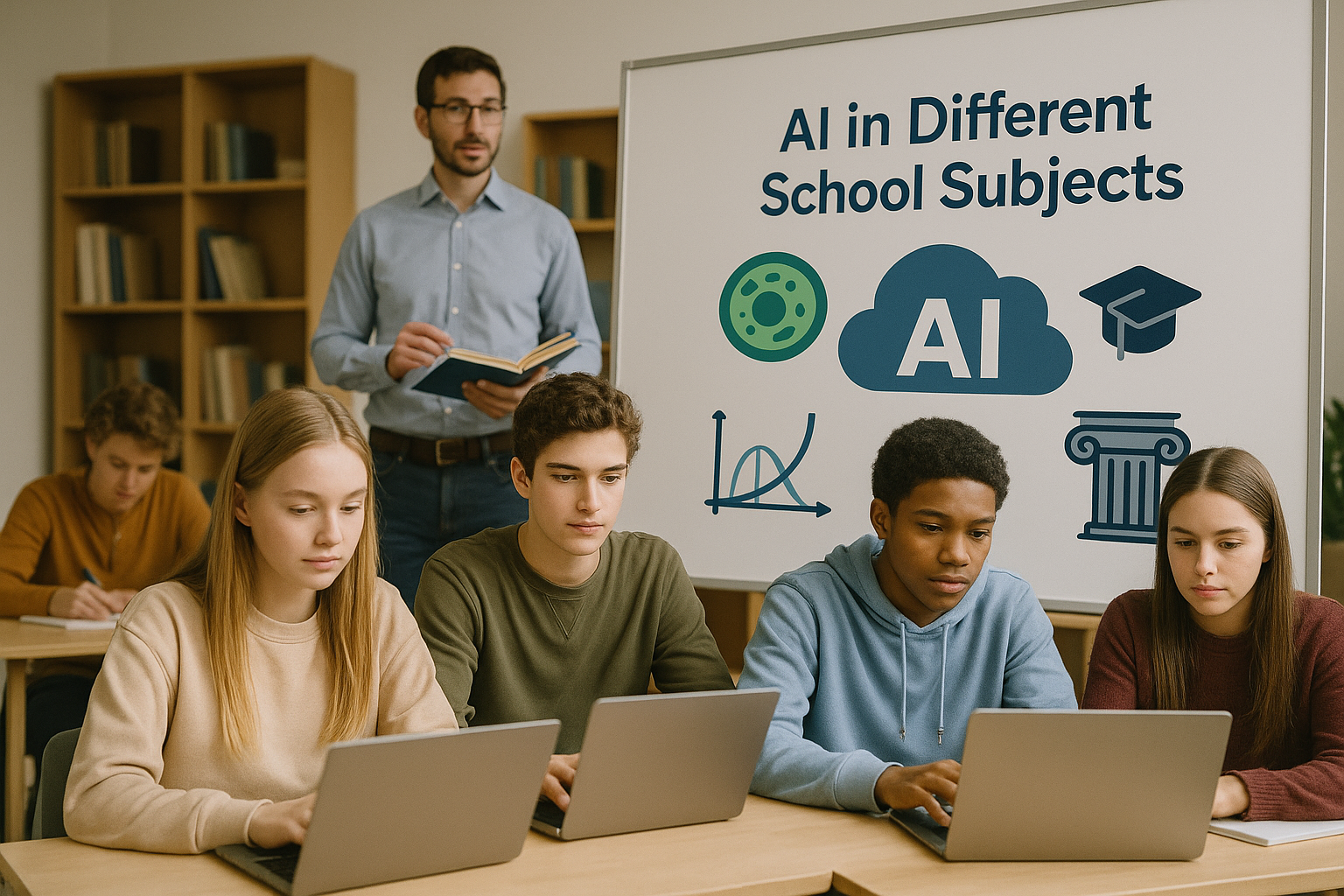
The integration of Artificial Intelligence (AI) into the education system is reshaping not only how content is taught, but also how teachers interact with students, identify difficulties, and promote meaningful learning. One of the areas where this transformation is most evident is in the application of AI across different school subjects.
Artificial Intelligence is profoundly transforming the educational landscape, going well beyond personalised learning and task automation. Its application now extends across various school subjects, adapting to the specifics of each area of knowledge. From Mathematics to Languages, from Natural Sciences to the Arts, AI is being integrated into tools that support both teachers and students in teaching and learning, with proven impact on performance, motivation, and pedagogical efficiency.
Historically, educational technologies were implemented in a generic way, with little adaptation to the specifics of different areas of knowledge. However, AI has introduced the possibility of deep personalisation, adapting not only to the student profile but also to the demands and methodologies of each subject.
The great value of AI lies in its ability to analyse data in real time, generate adapted content, identify learning difficulties, and recommend personalised learning pathways. When used wisely, AI becomes an educational ally that respects the autonomy of teachers and values their irreplaceable role in the mediation of knowledge.
This chapter aims to explore how AI is being used in different school subjects, highlighting specific tools, real examples, and the associated pedagogical benefits. In all approaches, it remains a key principle to value the role of the teacher, not as a mere technical facilitator, but as a critical and ethical mediator of this process.
1. Mathematics
Tools and examples
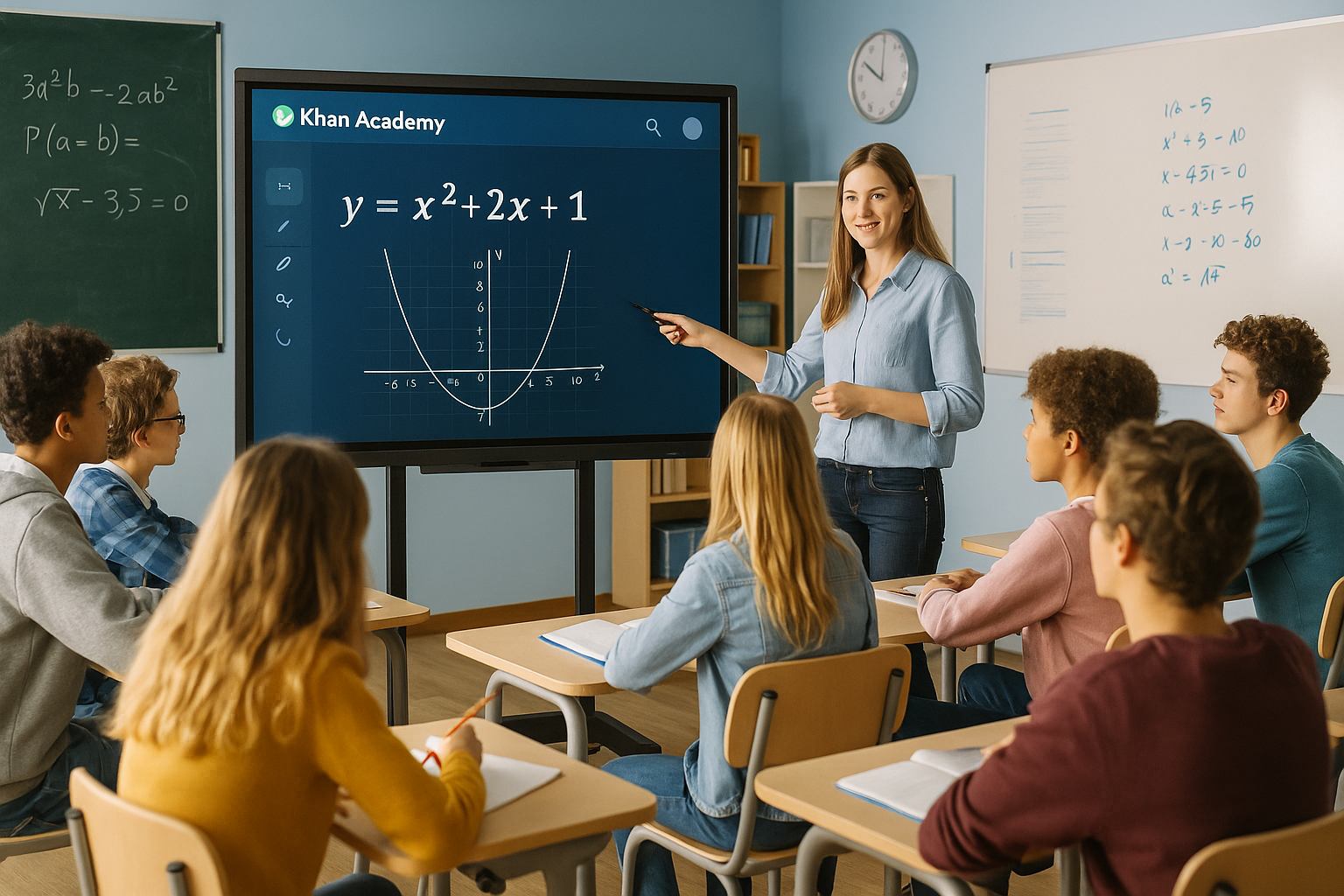
Mathematics is one of the subjects where AI has quickly demonstrated pedagogical impact. Tools such as:
- Photomath: allows students to take a photo of a maths problem and view the step-by-step solution, clearly explained.
- Microsoft Math Solver: recognises handwritten or typed problems and provides solutions with visual explanations and learning suggestions.
- Socratic (Google): uses AI to identify the type of problem and suggest resources, videos or tailored explanations.
- Khanmigo: acts as a virtual tutor guiding the student's reasoning.
Advantages
- Support for autonomous problem-solving.
- Visual and interactive explanations, tailored to the student’s level.
- Diagnosis of recurring difficulties.
- Reinforcement of learning outside lesson time.
- Immediate feedback.
- Personalised visual explanations.
- Diagnosis of specific difficulties.
Real example
- A pilot study in Finnish secondary schools showed that students who used Photomath for homework significantly improved their understanding of algebra, especially those with learning difficulties.
- In a project in Estonian schools, the use of Microsoft Math Solver reduced algebra test errors among 8th-year students by 25%.
2. Languages
Tools and examples
Natural Language Processing (NLP) technologies have revolutionised language teaching, supporting writing, reading, listening, and speaking. Among the most used tools:
- Grammarly: offers suggestions for grammar, spelling, and style correction, promoting self-regulation in writing.
- QuillBot: rewrites sentences while maintaining meaning, ideal for teaching paraphrasing and linguistic variation.
- ChatGPT (OpenAI): can simulate dialogues, correct essays, generate personalised exercises, and explain language rules.
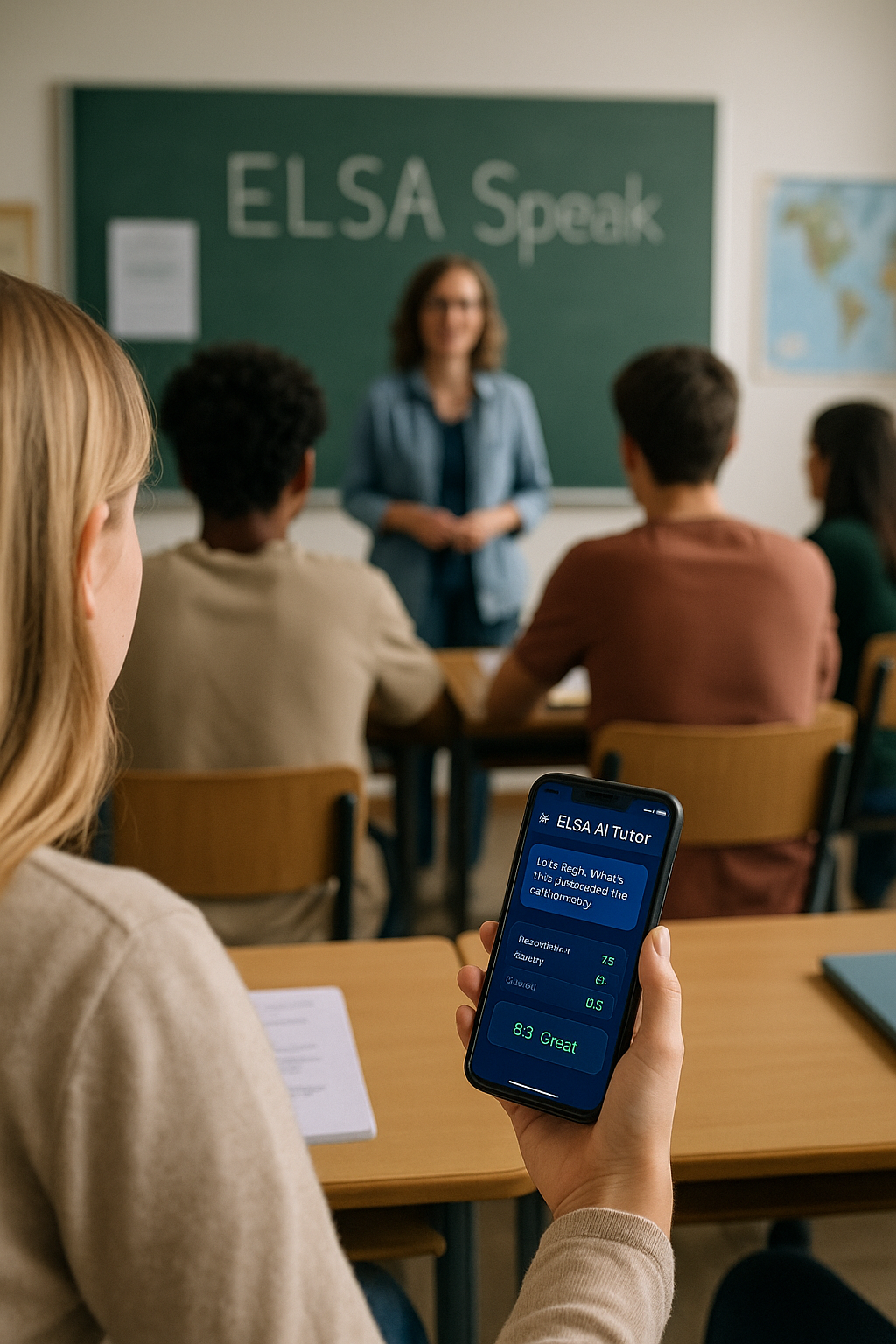
- Elsa Speak: uses AI to train English pronunciation with immediate and personalised feedback.
Advantages
- Immediate and explained error correction.
- Speaking and writing practice with formative feedback.
- Personalisation by level and linguistic objectives.
- Increased learning autonomy.
- Pronunciation monitoring with personalised feedback.
- Simulation of authentic conversations.
- Increased confidence and fluency.
Real example
- At an international school in Belgium, the introduction of Grammarly as a support tool for English writing reduced grammar errors by 30% in non-native students' essays within a semester.
- In bilingual schools in Germany, the use of Elsa Speak increased students’ phonetic accuracy by 35% after two months of regular practice.
3. Natural Sciences (Physics, Chemistry, Biology)
Tools and examples
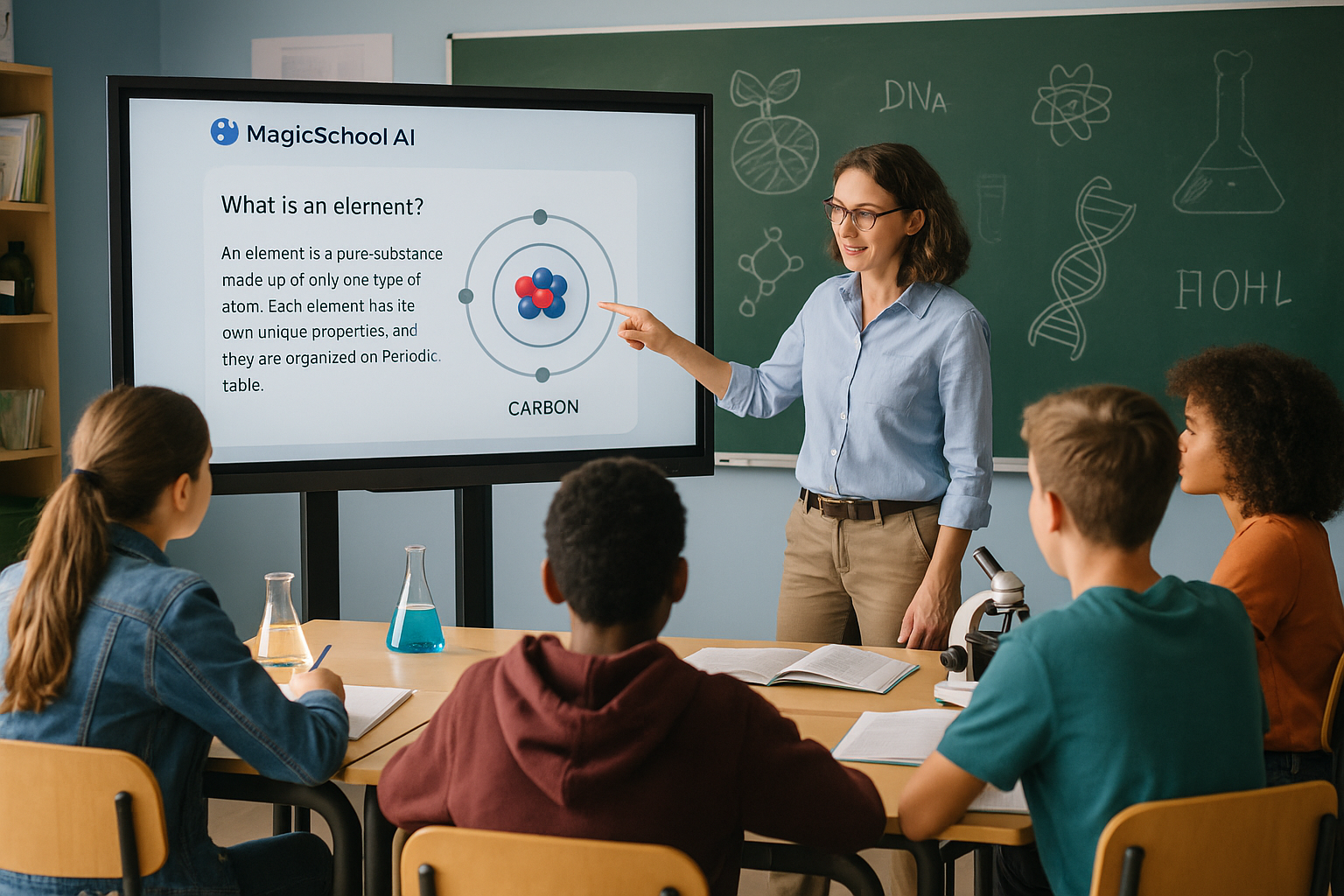
Sciences benefit from AI through simulations, virtual tutoring, and data analysis. AI enables simulation of experiments, reinforcement of concepts, and diagnosis of difficulties. Tools such as Labster, Google Science Journal and Curipod bring lab experiences into the digital environment.
- Labster: simulates virtual Physics, Chemistry, and Biology labs using AI to adapt the experience to the student's performance.
- Curipod: creates interactive presentations and quizzes with AI support, promoting active learning.
- Khan Academy with AI (Khanmigo): offers personalised tutoring based on performance in subjects such as Physics and Chemistry.
Advantages
- Overcoming physical or laboratory resource limitations.
- Interactive visualisation of abstract concepts.
- Safe training in complex experiments.
- Automatic feedback and formative guidance.
- Access to lab experiences without physical materials.
- Visualisation of microscopic or dangerous processes.
- Formative and adaptive feedback.
- Integration of gamification and interactivity.
Real example
- In Danish schools, using Labster in Biology reduced by 40% the time required to understand cellular processes such as mitosis, compared to purely theoretical methods.
- In French secondary schools, Labster reduced by 40% the time needed for students to understand complex chemical reactions.
4. History and Social Sciences
Tools and examples
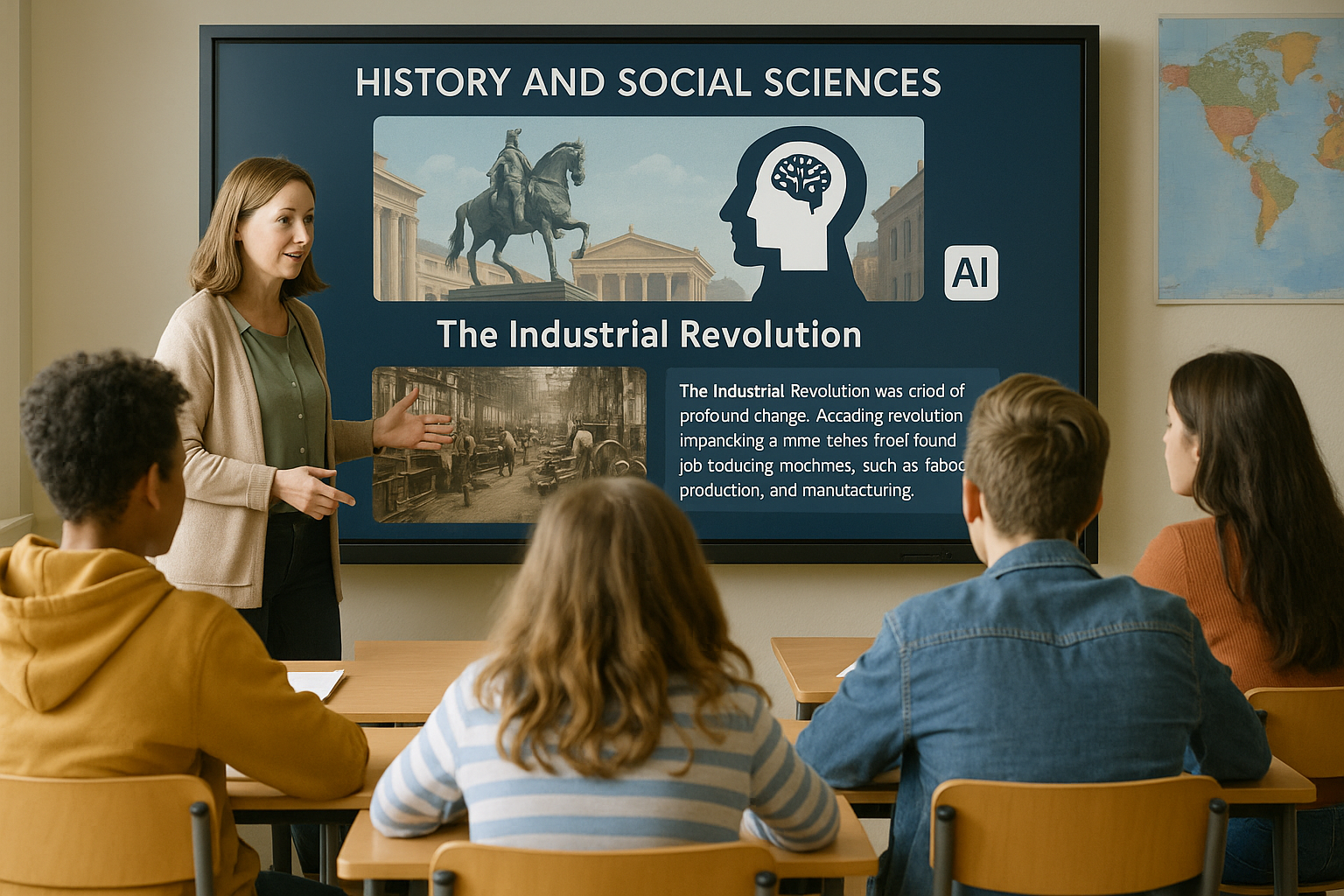
Though less explored, these subjects also benefit from AI. AI applied to Social Sciences has evolved, focusing on content creation, historical document analysis, and narrative construction. Tools such as ChatGPT, SlidesAI, and DebateAI are particularly useful.
- ChatGPT and similar tools: can simulate dialogues with historical figures, generate timelines, or suggest document source analyses.
- Canva with AI: allows the creation of infographics, maps and visual presentations with design assistant support.
- Curipod and SlidesAI: rapidly create interactive content based on curricular themes.
- DebateAI: generates arguments for and against historical events or sociopolitical topics.
Advantages
- Creation of interactive narratives.
- Increased engagement through simulations and storytelling.
- Stimulation of critical thinking.
- Recreation of historical contexts for greater engagement.
- Analysis of sources with technical support.
- Production of richer and more diverse content.
Real example
- In a pilot project in Brazilian schools, Year 9 students used ChatGPT to create fictional interviews with historical figures, which promoted better retention of content and understanding of the socio-political context of events.
- In a São Paulo secondary school, students used ChatGPT to write speeches as historical figures from the French Revolution, promoting deep understanding of the ideologies involved.
5. Visual and Technological Education
Tools and examples
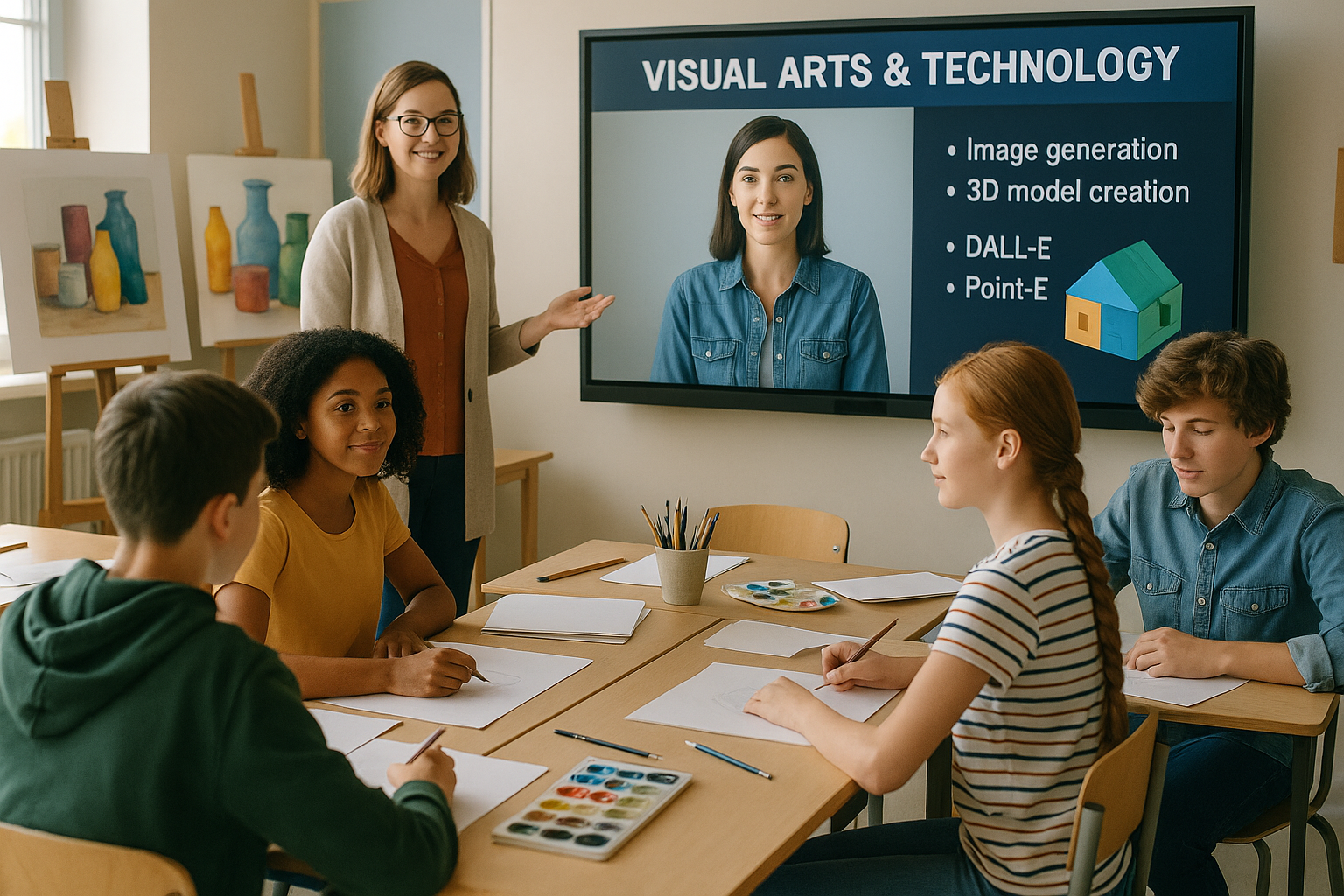
AI applied to the arts has revealed enormous creative potential. AI-powered creative tools are transforming visual and technological arts lessons. Applications like DALL·E, Canva with AI, and Autodraw are increasingly common.
- DALL·E (OpenAI): generates images from text descriptions, useful for creative exercises and visual interpretation.
- Autodraw (Google): recognises drawings and suggests stylised versions using AI (turns freehand drawings into more polished illustrations based on pattern recognition).
- Canva with design assistant: allows creation of posters, logos and other materials with intelligent support in composition and colour palette.
Advantages
- Stimulation of creativity and artistic experimentation.
- Access to varied visual styles without advanced technical knowledge.
- Immediate visual feedback on design and composition.
- Easy graphic production without advanced design knowledge.
- Exploration of new forms of artistic expression.
Real example
- At an art school in Barcelona, DALL·E was integrated into a graphic design module, enabling students to explore historical visual styles and create compositions based on literary themes.
- Students on a technical design course in Madrid used DALL·E to illustrate group-created stories, fostering collaboration between arts and language students.
6. Physical Education
Tools and examples
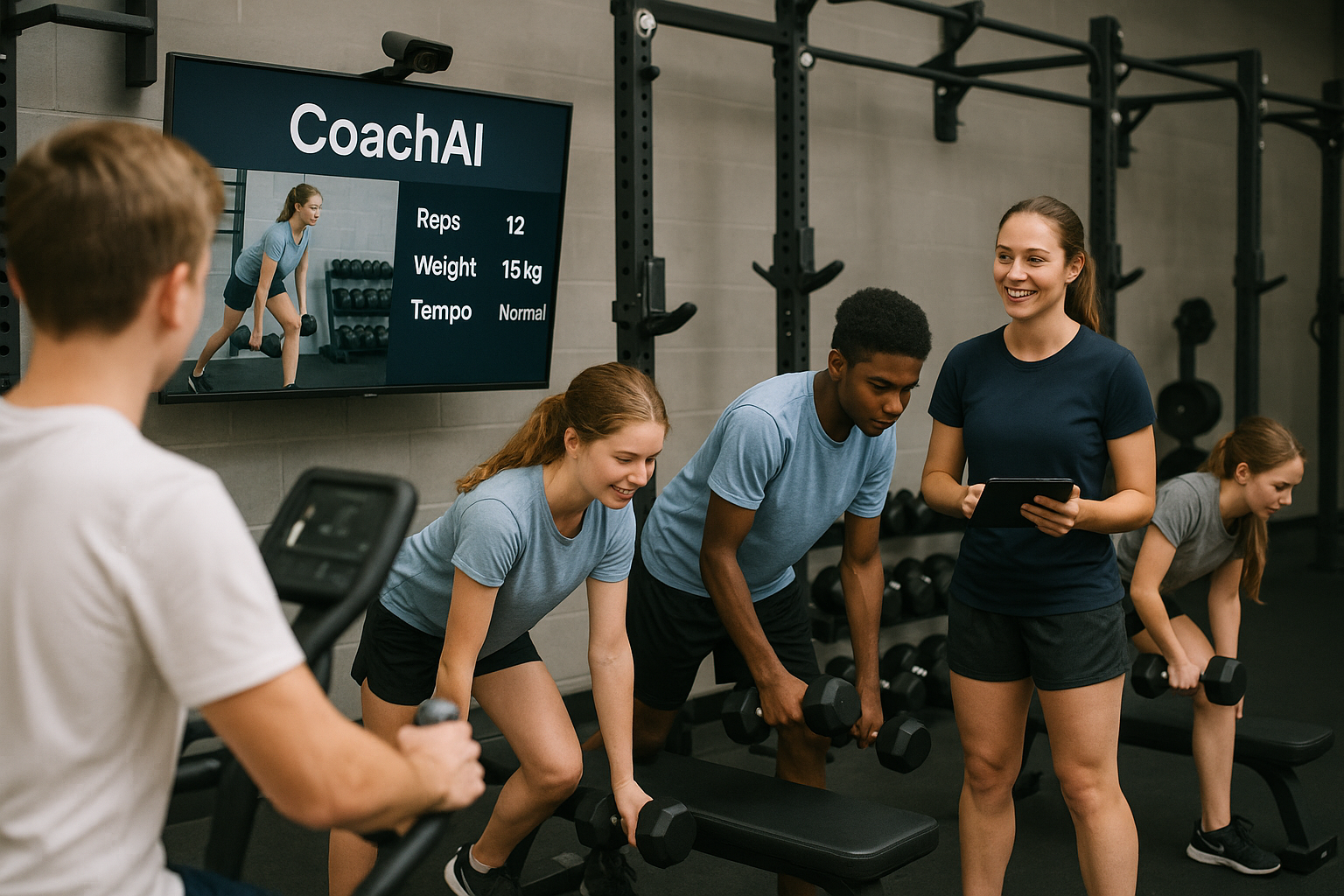
Though less traditionally technological, Physical Education also benefits from AI for performance monitoring, movement analysis, and physiology.
Still at an early stage but with promising applications:
- CoachAI: analyses videos of physical movements and provides feedback on posture and performance.
- MyJump2: uses AI to measure vertical jump height from videos with high precision.
- Wearables with AI (e.g., Whoop, Fitbit): monitor heart rate, effort, and recovery, useful for teaching exercise physiology.
Advantages
- Personalised monitoring of physical performance.
- Promotion of body awareness.
- Objective data for assessment and improvement.
- Accurate monitoring of physical progress.
- Integration of sports science into basic education.
- Promotion of self-assessment.
Real example
- In Dutch schools, MyJump2 enabled precise monitoring of students’ progress in vertical jumping during an athletics module, supporting differentiated teaching.
- In Swedish schools, using MyJump2 was associated with improvements in jump performance and students’ understanding of their own physical limits.
7. Music Education
Tools and examples
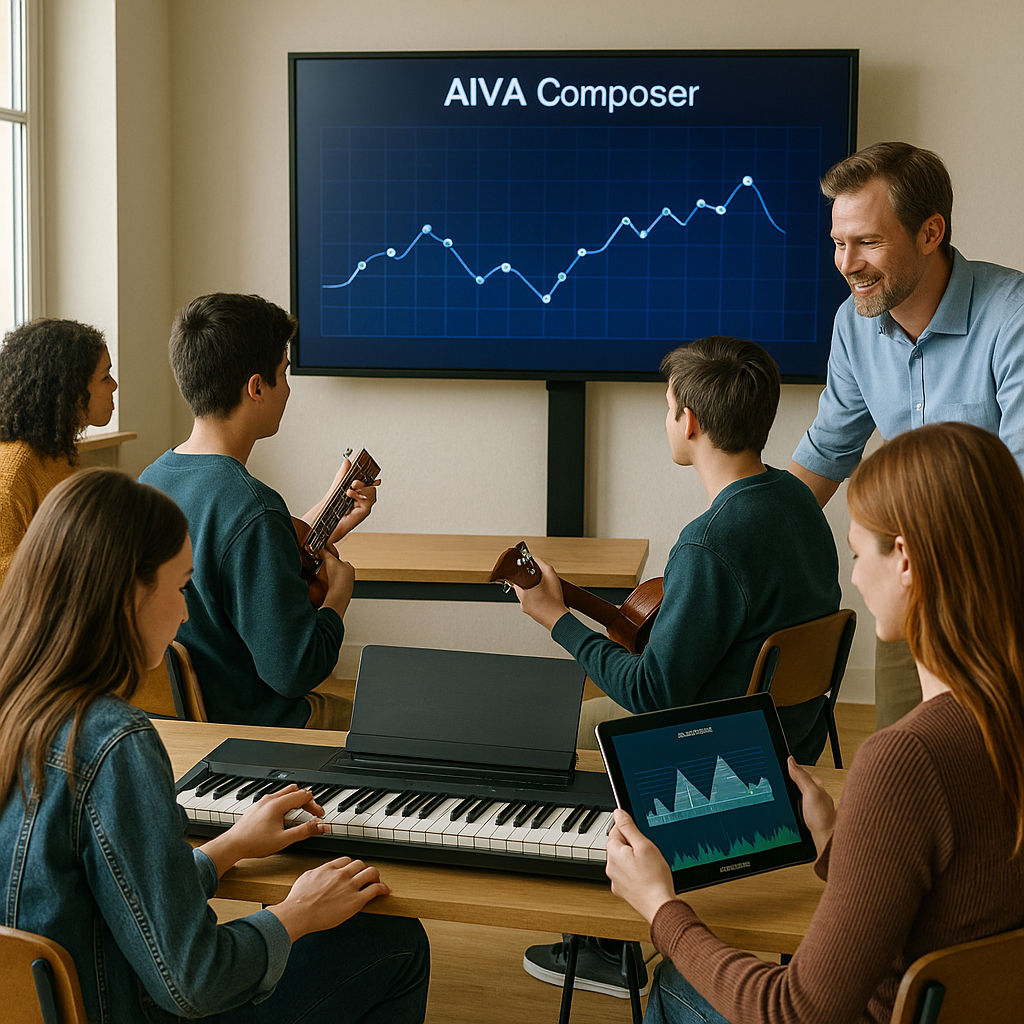
AI is starting to enter this creative field. Music is a subject where AI supports both instrumental practice and music creation.
- AIVA and Soundraw: create musical compositions based on genres and instructions provided by students, generating compositions in various styles from text or melodic input.
- Yousician: uses AI to listen to instrument performances and provide immediate feedback.
- Chrome Music Lab: explores musical concepts with visual and auditory support, enabling exploration of sound, rhythm, and harmony through interactive experiences.
Advantages
- Immediate feedback on musical performance.
- Creative exploration of styles and composition.
- Support for auditory and rhythmic training.
- Technical feedback on performance.
- Stimulus for composition.
- Interactivity and playfulness.
- Support for autonomous musical expression.
Real example
- At a secondary school in Lisbon, students used AIVA to compose original pieces based on poems by Fernando Pessoa, in an interdisciplinary project with the Portuguese subject.
8. Philosophy and Citizenship Education
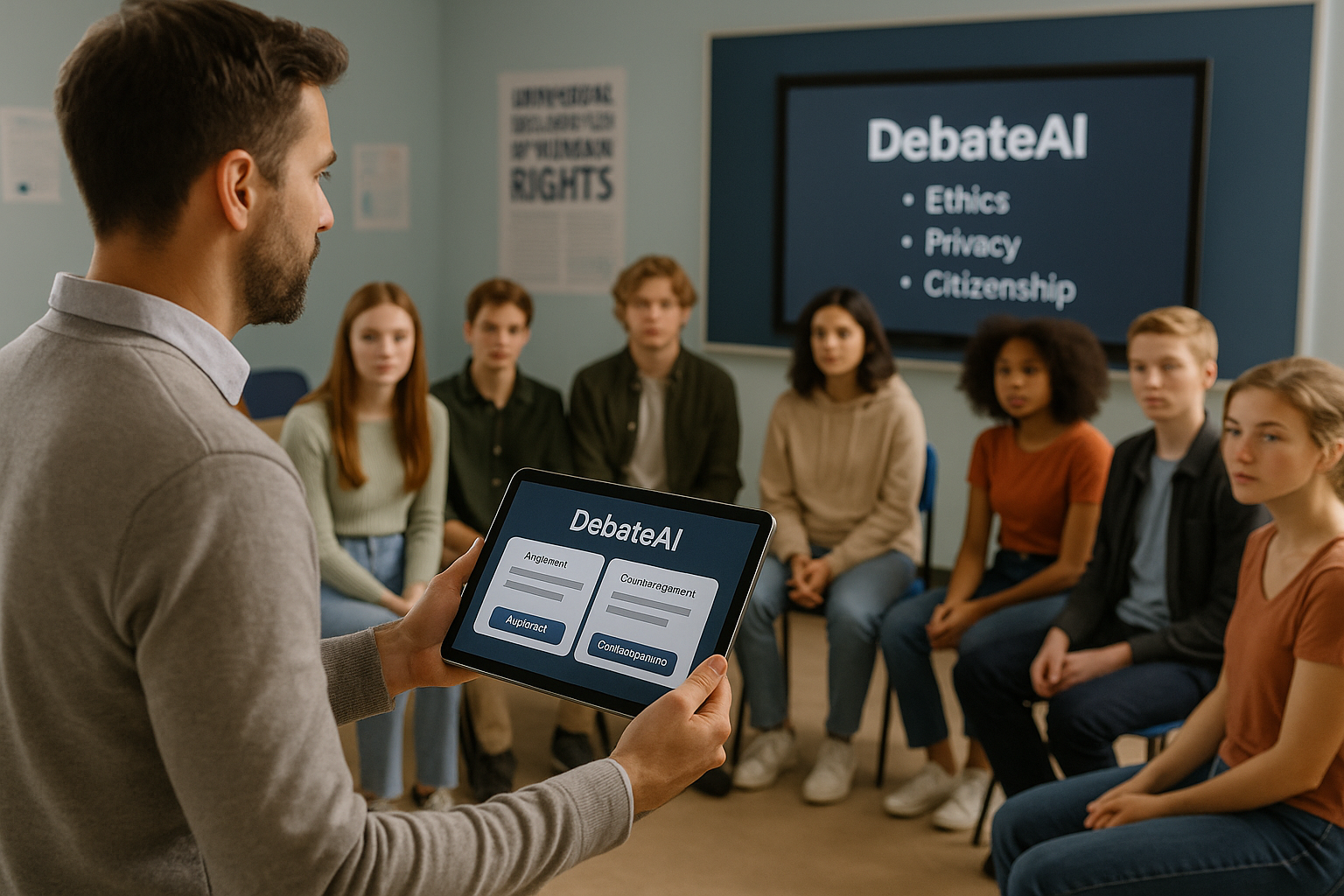
Tools and examples
These subjects value critical thinking, debate, and analysis of dilemmas. AI can be used to simulate discussions and generate ethical scenarios.
- ChatGPT: simulates argumentative discussions, presents divergent philosophical viewpoints, or creates moral dilemma scenarios.
- DebateAI: enables debates on current issues by generating automatic counter-arguments, organising discussions with divergent perspectives on ethical or social topics.
Advantages
- Stimulation of critical and argumentative thinking.
- Structured discussions with multiple perspectives.
- Exploration of ethical dilemmas related to AI itself.
- Promotion of well-founded debate.
- Exploration of modern ethical dilemmas.
- Creation of role-play argumentative scenarios.
Real example
- In French secondary schools, students used DebateAI to prepare debates on digital privacy and surveillance, fostering critical awareness and argumentative expression.
- In a secondary philosophy course in Porto, students used ChatGPT to explore the moral limits of AI use, generating deep discussions on ethics and technology.
Summary of AI Benefits by Subject
|
Subject |
AI Benefits |
AI Tools Used |
|
Mathematics |
Step-by-step solutions, immediate feedback, autonomy reinforcement |
Photomath, Microsoft Math Solver, Khanmigo |
|
Languages |
Automatic correction, pronunciation & writing practice, simulated dialogue |
Grammarly, Elsa Speak, ChatGPT |
|
Natural Sciences |
Safe experiment simulation, concept visualisation |
Labster, Curipod, Khan Academy AI |
|
History & Social Sciences |
Narrative creation, historical simulations, source analysis |
ChatGPT, DebateAI, SlidesAI |
|
Visual & Technological Arts |
Assisted creation, creativity stimulation, aesthetic feedback |
DALL·E, Canva with AI, Autodraw |
|
Physical Education |
Movement analysis, individual monitoring, data-based evaluation |
CoachAI, MyJump2, AI wearables |
|
Music |
Technical training support, creative composition with AI |
AIVA, Yousician, Chrome Music Lab |
|
Philosophy/Citizenship |
Argumentative discussion, simulation of ethical dilemmas, critical thinking |
ChatGPT, DebateAI |
Conclusion
The introduction of Artificial Intelligence across different school subjects is not merely a matter of technological innovation but of pedagogical transformation. By adapting to the specific characteristics of each area of knowledge, AI contributes to more inclusive, motivating, and effective methodologies, always maintaining the teacher as the fundamental mediator of learning.
However, it is essential that the adoption of these tools be undertaken with a critical mindset, proper training, and attention to ethics, ensuring that AI complements — and never replaces — the human dimension of teaching.
The future points towards education increasingly interlinked with AI, where interdisciplinarity, creativity, and critical thinking will be as important — or more so — than the memorisation of content. The role of teachers, trained and aware of AI's possibilities, will be central to this process.
The presence of AI in different school subjects represents a unique opportunity to reinvent pedagogical practices and offer more personalised, engaging, and effective learning experiences. However, this transformation must be accompanied by ongoing teacher training, attention to ethical issues, and reinforcement of teachers’ critical role in selecting and mediating these tools.
Far from being replaced by technology, teachers become even more necessary as human guides in an increasingly automated educational context. It is their sensitivity, ethics, and pedagogical experience that ensure AI serves education — and not the other way around.
Last modified: Monday, 23 June 2025, 12:07 PM